From the mines in Zimbabwe to managing an alternative fuel plant in the United Kingdom, Richard’s journey brings a new perspective on what waste can become. As Plant Manager at TSP, he plays an important role in converting materials originally destined as useless into Subcoal, an alternative for fossil fuels.
In this story, Richard shares how his technical background shaped his path, why Subcoal excited him from the start, and how changing our view of waste can transform the way we see the future.
Q: Can you introduce yourself and share your role at N+P?
"I’m the Plant Manager at TSP. I’m originally from a mining town in Zimbabwe called Kadoma. I studied Mechanical Engineering and trained and worked in the mines."
Q: What brought you to the UK?
"I’m married to my wife, who is a chartered accountant. She got an opportunity to work in the UK, and we decided to move over for a few years to see what life here would be like."
Q: How did your journey with N+P begin?
"My first role in the UK was in Crayford, where I worked as a maintenance supervisor. After about ten months, I moved to Birmingham and spent a couple of years there. After that, an old colleague reached out to me and he told me about an opportunity in the North East of England."
Q: What attracted you to this role at TSP?
"I learned about this product called Subcoal. That really excited me. I thought that if I had skills that could help make this product, then I’d give it a go."
"I don’t see it as working with waste. I see it as making an alternative fuel."
Q: What are some of your most memorable moments at work?
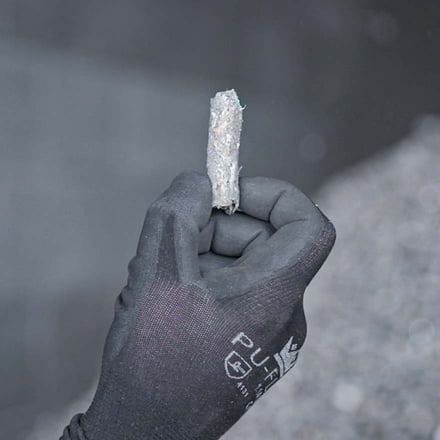
"One of my best moments is taking people around the plant. We go through the whole process and then look at what the material becomes at the end, the fuel. I always ask people: do you remember what this looked like when we started the tour? And can you believe it now looks like this?"
Q: What does ‘New Perspective’ mean to you when it comes to the future?
"For me, the future will see a lot more material diverted from landfill and turned into usable fuel. When I wake up in the morning, I don’t think of it as going to work in a waste plant. I think of it as going to make a fuel — an alternative fuel. So when people ask me what I do, I say: I work in a plant that manufactures an alternative fuel."